
The Society of Toxicology (SOT) Annual Meeting is the premier global forum for toxicologists, researchers, and industry leaders advancing the science of toxicology and brings together experts from academia, industry, and government to share cutting-edge research, explore emerging methodologies, and discuss regulatory and safety challenges shaping the future of human and environmental health.
LifeNet Health LifeSciences is proud to showcase how our innovative new approach methodologies (NAMs) can help reduce uncertainty and deliver more predictive insights than traditional approaches alone. Designed to better reflect human biology across discovery and safety assessment, our solutions empower toxicologists to generate data they can trust with greater confidence. From high-quality, prospectively recovered human biospecimens to advanced in vitro models and integrated multi-organ microphysiological systems (MPS), our portfolio supports human-relevant science that strengthens safety evaluation and risk assessment.
High Quality Solutions that Better Represent Human Biology
Cells & Cell Models
- TruVivo® 2D+ Hepatic System
- 3D Thyroid Microtissue Model
- Human Hepatocytes and Liver NPCs
In Vitro Assay Services
- Integrated Multi-organ MPS
- Endocrine Disruption Testing
- DMPK/ADMET Studies
Prospective Biospecimens
- Brain, Skin, Gut, and More
- Healthy and Diseased
- Prospective Samples
Innovative NAMs for Human Risk Assessment
TruVivo® 2D+ Hepatic System
TruVivo is an advanced long-term hepatic system that enables in vitro measurement of thyroxine (T4) glucuronidation in rat and human systems to support mechanistic evaluation of indirect thyroid hormone disruption driven by liver metabolism. By preserving nuclear receptor responsiveness over repeated-dose exposures, TruVivo allows quantification of baseline and induced T4G, helping toxicologists distinguish liver-driven clearance effects and interpret species relevance within mechanistic, weight-of-evidence thyroid risk assessments.
Human 3D Thyroid Microtissue Model
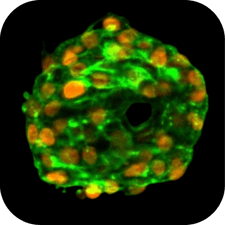
The human 3D thyroid microtissue model is a 96-well, organotypic model built from primary human thyrocytes that enables quantitative measurement of thyroid hormone synthesis and secretion. By directly assessing functional hormone output, this assay identifies chemicals that disrupt thyroid hormone production in a human-relevant system, providing mechanistic insight beyond single-target approaches. Available as both a product and a fully supported assay service, it helps discovery and safety teams confidently evaluate potential thyroid liabilities within modern NAM-based workflows.
Integrated Multi-Organ MPS Platform
Our integrated multi-organ MPS platform provides flexible, human-relevant evaluation of pharmacokinetics and toxicity with greater simplicity and affordability than traditional organ-on-chip systems. Isolated tissues are linked via simulated vascular flow in configurable 2-, 3-, or 4-organ designs, such as intestine–liver–kidney or intestine–liver–thyroid, enabling simultaneous assessment of metabolism, clearance, and organ-specific toxicity. The system supports key PK parameters, PBPK modeling, improved IVIVE, and can be deployed in GLP study designs.
Exhibitor-Hosted Session
Advancing NAMs for Assessing Thyroid Hormone Disruption: Liver and Thyroid Models for Risk Assessment
Monday, March 23, 2026; 1:45 - 2:45 pm
Room 24A‚ San Diego Convention Center
Join us for a session highlighting novel in vitro primary cell–based models designed to assess direct and indirect thyroid hormone disruption. We will highlight collaborative efforts among industry, academic, and regulatory stakeholders to promote harmonized and human-relevant NAMs that help reduce reliance on animal testing. Speakers will review data sets using known reference compounds to illustrate how mechanistic testing strategies can inform human risk assessment.
The discussion will feature:
-
The development and validation of a human thyrocyte in vitro assay, including an interlaboratory validation of a 3D human thyroid microtissue model.
- The novel application of TruVivo for evaluating thyroxine (T4) metabolism via glucuronidation pathways.
Learn how these complementary approaches strengthen human-relevant screening and risk assessment by providing a holistic framework to characterize disruption of thyroid hormone synthesis, secretion, and metabolism.
Guest Speakers
Chad Deisenroth, PhD, Principal Laboratory Toxicologist, Center for Chemical Informatics and Screening at ULRI Chemical Insights

Dr. Chad Deisenroth earned his Ph.D. in Genetics and Molecular Biology from the University of North Carolina at Chapel Hill and completed postdoctoral training in chemical safety sciences at The Hamner Institutes for Health Sciences. Prior to joining ULRI, Dr. Deisenroth served as a principal investigator in the Center for Computational Toxicology and Exposure at the U.S. Environmental Protection Agency, where he advanced the development and application of in vitro new approach methods (NAMs) for predictive toxicology. His work at the EPA centered on engineering human-relevant cell culture models and innovative testing approaches to improve the speed, reliability, and biological relevance of chemical hazard identification for human health effects.
Dr. Deisenroth has authored numerous peer-reviewed publications in leading toxicology journals and received recognition for several high-impact contributions in the field of in vitro toxicology. He has also led U.S. efforts to validate NAM technology in collaboration with international partners and currently contributes to an OECD working group focused on standardizing and implementing NAMs for endocrine toxicity testing.
View Abstract: Predictivity Assessment of the Human Thyroid Microtissue Assay
Board # J641
Ahtasham Raza, PhD, Senior Toxicologist, Department of Genetics and Molecular Toxicology at Corteva Agriscience

Dr. Ahtasham Raza earned his Ph.D. in Materials Science and Tissue Engineering from the University of Sheffield, United Kingdom, where his doctoral and postdoctoral research focused on engineering human-relevant 3D in vitro models to evaluate the efficacy and toxicity of novel metal-based compounds.
Prior to joining Corteva, Dr. Raza served as a Senior Scientist at contract research organizations, where he led the development of NAMs to identify toxic liabilities using diverse cellular models and high-throughput screening platforms, supporting chemical hazard identification for human health.
Since joining Corteva in 2022, Dr. Raza has played a key role in the development of in vitro, cell-based assays for mechanistic and mode of action toxicology studies. His current work focuses on advancing NAMs to assess thyroid hormone disruption, with the goal of improving human-relevant chemical hazard identification and supporting regulatory and translational decision-making.
View Abstract: Robustness and Predictive Utility of the TruVivo® T4 Glucuronidation Assay in Primary Hepatocytes for Regulatory Safety Evaluation
Board # E431
Poster Presentations
Interpreting In Vitro Permeation Testing Layer-Deposition Data Using a Mechanistic Skin Model in MoBi
Date & Time: Monday, March 23; 9:15 - 11:45 am
Board No. E388
This study compares in vitro permeation testing of four chemicals on excised human skin with in silico predictions from a mechanistic skin permeation model to evaluate how well the model replicates experimental absorption and layer‑deposition outcomes.
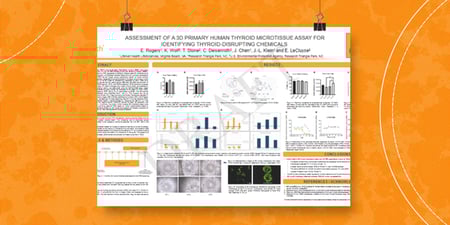
Assessment of a 3D Primary Human Thyroid Microtissue Assay for Identifying Thyroid-Disrupting Chemicals
Date & Time: Monday, March 23; 1:45 - 4:15 pm
Board No. G528
This study evaluates the performance and reproducibility of a 3D thyroid microtissue assay as a human-relevant New Approach Methodology (NAM) for high-throughput identification of thyroid-disrupting chemicals.
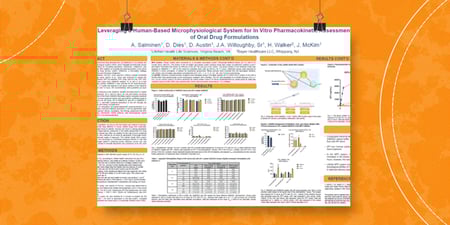
Leveraging a Human-Based Microphysiological System for In Vitro Pharmacokinetic Assessment of Oral Drug Formulations
Date & Time: Monday, March 23; 1:45 - 4:15 pm
Board No. G544
This study explores the utility of a three-organ MPS platform to evaluate the pharmacokinetics of an active pharmaceutical ingredient (API) delivered via a self-nano-emulsifying drug delivery system (SNEDDS), a formulation strategy designed to enhance oral bioavailability and protect APIs from degradation and first-pass metabolism.
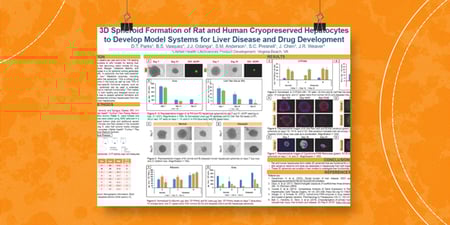
3D Spheroid Formation of Rat and Human Cryopreserved Hepatocytes to Develop Model Systems for Liver Disease and Drug Development
Date & Time: Tuesday, March 24; 9:15 - 11:45 am
Board No. A113
Discover how cryopreserved rat and human hepatocytes form functional 3D spheroids that maintain liver phenotype for 21 days. Using both non-diseased and diseased human donors, spheroids showed sustained albumin and urea production, stable CYP3A4 activity, viable ATP levels, formation of bile canalicular networks, and lipid accumulation consistent with steatosis.
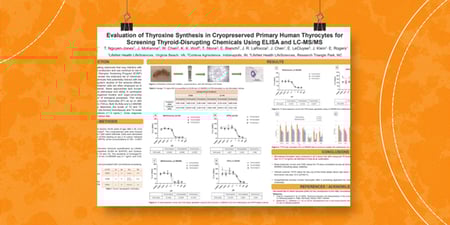
Evaluation of Thyroxine Synthesis in Cryopreserved Primary Human Thyrocytes for Screening Thyroid-Disrupting Chemicals Using ELISA and LC-MS/MS
Date & Time: Tuesday, March 24; 9:15 - 11:45 am
Board No. H608
This study with the U.S. EPA Endocrine Disruptor Screening Program addresses a need for advancing human-relevant NAMs for identifying thyroid-disrupting chemicals. Results showed that cryopreserved human thyrocyte 3D microtissues enable physiologically relevant, reproducible screening to support human health risk assessment across chemical, personal care, and pharmaceutical industries.
Posters will be available for download after being presented.
Meet Our Experts
Jean-Louis Klein
Chief Scientist
Jean-Louis Klein, PhD, is an accomplished scientific leader with more than 30 years of experience in primary human and animal cell culture and extensive expertise in complex in vitro systems, including organoids, spheroids, 3D printed tissues, tissue slice culture, and organ on a chip platforms. His work focuses on the development and validation of human predictive cell models that advance drug development, safety assessment, and translational science.
Jean-Louis brings extensive industry experience to his role, including over 25 years of experience at GlaxoSmithKline (GSK). As Scientific Director at GSK, he led multidisciplinary teams in developing cutting edge model systems such as high content imaging and advanced tissue technologies in multiple disease areas covering liver diseases, metabolic syndrome, neurodegenerative diseases, cancer, and osteoarthritis.
.png?width=200&height=200&name=Jean-Louis%20Klein%20(1).png)
Edward LeCluyse, PhD
Research Fellow

Jamin A. Willoughby, Sr., PhD
General Manager of Operations, In Vitro Assay Services


.png?width=225&height=225&name=MPS%20diagram%20(1).png)


.png?width=125&height=125&name=EDA%20ROGERS%20HEADSHOT1%20(4).png)

.png?width=125&height=125&name=Danielle%20Parks%20(1).png)